Thu, 10 Sep 2026 04:30:00 PDT

September 10: National TV Dinner Day: --
National TV Dinner Day is observed annually on September 10th. In
1953, C.A. Swanson & Sons changed the prepackaged meal
business forever. Introducing the TV Dinner revolutionized frozen
food. In 1962, Swanson stopped using the name TV Dinner. However,
in the United States, the term remains synonymous with any
prepackaged dinner purchased frozen from a store and heated at
home. The first Swanson TV Dinner consisted of a Thanksgiving meal
of turkey, cornbread dressing, peas, and sweet potatoes.
Originally, Swansons made the tray of aluminum. They separated
each food item into individual compartments, too. At home, the
cook heated the dinner in the oven. The cooking time was usually
25 minutes. Today, nearly all frozen food trays can be cooked in
the microwave or a conventional oven. When Swanson's first sold TV
dinners, they priced them at 98 cents. In the first year,
production estimates reached 5,000 dinners. To their surprise,
Swanson far exceeded that amount. In the first year, they sold
more than 10 million of them. To observe National TV Dinner Day,
get out a TV dinner, pop it in the microwave or oven, and enjoy!
Use #NationalTVDinnerDay to post on social media. On Sale Until
Midnight Tonight PT!
https://store.earthstation1.com/television-1988-tv-documentary-series-8-shows-4-dual-laye198884.html
Thu, 10 Sep 2026 04:30:00 PDT

September 10: Swap Ideas Day: -- A
holiday that brings people together, so they can pick each other's
brains. On Swap Ideas Day, people have the opportunity to bounce
different ideas off each other. It is always a fun time with
friends, families, coworkers, even strangers. All wonderful
inventions and creations happen from an idea. Swap Ideas Day, also
known as National Swap Ideas Day, is one that's filled with so
much potential. These are the potentials that manifest when people
trade ideas and opinions. Every human being is unique, and we all
have different talents and thoughts. This is why it is important
to exchange ideas with others. Ever since the dawn of time, humans
have shared ideas. That's how great things get done. Most of the
wonderful, incredible, and beautiful things we see today are
products of equally incredible and beautiful ideas. Most of the
time, these ideas arrive when we exchange thoughts with other
people. As the popular saying goes, "two heads are better
than one." The best ideas are products of several minds
coming together to do something. Idea swapping can take any form
at all. Brainstorming is a popular way of swapping ideas. Debates
are also good ways of trading opinions. On Swap Ideas Day, the
idea is to create a serene environment where people can gather and
share their best ideas, casually and harmlessly. On Sale Until
Midnight Tonight PT!
https://store.earthstation1.com/greek-fire-ancient-greece-in-the-modern-era-tv-documentary-series.html
Thu, 10 Sep 2026 04:30:00 PDT

September 10: World Suicide Prevention
Day: -- It's a growing problem and the numbers tell a shocking
story. Every 40 seconds someone takes their own life according to
the World Health Organization (WHO). That's about 800,000 people
worldwide every year - although some estimates put that number
closer to 1 million. Suicide is the leading cause of death for
people aged 15 to 29 and for every suicide that results in death,
there are as many as 40 attempted suicides. What we know for sure
is that there's a lot to live for. Check out National Suicide
Prevention Month for more information. This year's theme is all
about 'Creating Hope Through Action.' So, let's work together with
our family, friends, healthcare workers, religious and political
leaders to prevent suicide through active counseling and support.
It's time we empowered others to be in charge of their lives and
value the one life they have. Did you know that suicide is the
tenth leading cause of death in the United States? It affects all
age groups equally. It's important therefore to have discussions
around mental health, making it easier for others to talk about
the tough times they are going through and seek professional help
if necessary. On Sale Until Midnight Tonight PT!
https://store.earthstation1.com/virginia-woolf-dvd-biography-literature-documentary.html
Thu, 10 Sep 2026 04:30:00 PDT

September 10: Gibraltar National Day: --
September 10, 1967: The 1967 Gibraltar Sovereignty Referendum: The
people of Gibraltar vote 99.64% in favor of remaining a British
dependency rather than becoming part of Spain. Accordingly,
September 10 is celebrated Gibraltar National Day, the official
national day of the British overseas territory of Gibraltar. The
Gibraltar Sovereignty Referendum Of 1967 was held to ask
Gibraltarian citizens they wished to pass under Spanish
sovereignty, with Gibraltarians keeping their British citizenship
and a special status for Gibraltar within Spain; or remain under
British sovereignty, with its own self-governing institutions. The
United Nations Special Committee On Decolonization was informed in
advance of the referendum and invited to observe. The invitation
was declined and instead the UN General Assembly passed Resolution
2353, which requested that the United Kingdom enter negotiations
with Spain (then under the dictatorship of General Franco) and
criticised the United Kingdom for holding a referendum. Resolution
2353 (XXII) was supported by seventy-three countries (mainly Latin
American, Arab, African and Eastern European countries), rejected
by nineteen (United Kingdom and the countries of the Commonwealth
of Nations), while twenty-seven countries abstained (Western
Europe and the United States). A new constitution was passed in
1969, The Gibraltar Constitution Order 1969, published on May 30.
1969 as an Order-In-Council (legislation formally made in the name
of the monarch [in this instance, Queen Elizabeth II Of The United
Kingdom] by and with the advice and consent of the Privy Council
[King-in-Council]). In response to Gibraltar's new constitution,
the Spanish government immediately closed the border between Spain
and Gibraltar, cutting off all contacts and severely restricting
movement. The border was not fully reopened until February 1985,
nearly sixteen years later. Gibraltar National Day has been
celebrated annually on September 10 since 1992 to commemorate
Gibraltar's first sovereignty referendum of 1967. On Sale Until
Midnight Tonight PT!
https://store.earthstation1.com/british-public-information-and-propaganda-films-dual-layer-dvd.html
Thu, 10 Sep 2026 04:30:00 PDT

September 10, 1898: Europe: The History
Of Europe: The Cultural History Of Europe: La Belle Epoque
(French: "The Beautiful Epoch") (1871-1914): Fin De
Siecle (French: "The End Of The Century"; equivalent to
English "Turn Of The Century"): The Assassination Of
Empress Elisabeth Of Austria: -- #DOTD: #RIP: One of the most
significant events of the Turn Of The Twentieth Century, Fin De
Siecle and of the world, as well as one of the most significant
events of the cultural history of La Belle Epoque, occurs when the
beautiful and much admired Empress Elisabeth of Austria, Queen of
Hungary and many others titles by marriage to Emperor Franz Joseph
I, nicknamed Sisi (also spelled Sissi or Sissy), icon of La Belle
Epoque (from the end of the Franco-Prussian War in 1871 to the
outbreak of World War I in 1914) (b. December 24, 1837 [Christmas
Eve]) #dies aged 60 when she is assassinated by stabbing at 1:35
p.m. on a Saturday afternoon while travelling in Geneva, Austria
by Italian anarchist Luigi Lucheni. Lucheni believed in propaganda
of the deed, a philosophy advocating specific political action
meant to be exemplary to others and serve as a catalyst for
revolution, primarily associated with acts of violence perpetrated
by proponents of insurrectionary anarchism in the late 19th and
early 20th century, including bombings and assassinations. On
Wednesday morning September 14, the body was carried back to
Vienna aboard a funeral train. The inscription on her coffin read,
"Elisabeth, Empress of Austria". The Hungarians were
outraged, and the words, "and Queen of Hungary" were
hastily added. The entire empire was in deep mourning; eighty-two
sovereigns and high-ranking nobles followed her funeral cortege on
the morning of Saturday September 17 to the Imperial Crypt
(German: Kaisergruft), also called the Capuchin Crypt
(Kapuzinergruft), a burial chamber beneath the Capuchin Church and
monastery in Vienna, Austria. Duchess Elisabeth Amalie Eugenie In
Bavaria was born Elisabeth Amalie Eugenie Wittelsbach in Munich,
Kingdom of Bavaria. Elisabeth was Empress Of Austria, Queen Of
Hungary and many others titles by marriage to Emperor Franz Joseph
I, whom she married when she was sixteen years old. The death of
her only son Rudolf, and his mistress Mary Vetsera, in a
murder-suicide tragedy at his hunting lodge at Mayerling in 1889
known as The Mayerling Incident, was a blow from which Elisabeth
never recovered. Crown Prince Rudolf's death had momentous
consequences for the course of history in the nineteenth century.
As Rudolf had no son, the succession would pass to Franz Joseph's
brother, Archduke Karl Ludwig, and his eldest son, Archduke Franz
Ferdinand. This destabilization endangered the growing
reconciliation between the Austrian and the Hungarian factions of
the empire, which became a catalyst of the developments that led
to the assassination of Franz Ferdinand and his wife Sophie by
Gavrilo Princip, a Yugoslav nationalist and ethnic Serb, at
Sarajevo in June 1914 and the subsequent drift into the First
World War. Following Rudolf's death, Empress Elisabeth withdrew
from court duties and travelled widely, unaccompanied by her
family. She was obsessively concerned with maintaining her
youthful figure and beauty, which was already legendary during her
life. Elisabeth was the longest serving Empress of Austria, at 44
years. #EmpressElisabethOfAustria #Beauties #LaBelleEpoque
#FinDeSiecle #GayNineties #NaughtyNineties #VictorianEra
#TurnOfTheCentury #TurnOfTheTwentiethCentury #AustriaHungary
#LuigiLucheni #Anarchism #Assassinations #PropagandaOfTheDeed #MP4
#VideoDownload #DVD On Sale Until Midnight Tonight PT!
https://store.earthstation1.com/la-belle-epoque-18901914-western-high-society-cul18901914.html
Thu, 10 Sep 2026 04:30:00 PDT

September 10, 1801: #BOTD: #HBD: Marie
Laveau, Louisiana Creole practitioner of Voodoo, herbalist and
midwife, renowned in her native New Orleans and worldwide as the
"Queen Of The Voodoos" (d. June 15, 1881) is #born in
New Orleans, a free woman of color as well as a Quadroon (African,
Indian, French and Spanish). An alternate spelling of her name,
Laveaux, is considered by historians to be from the original
French spelling. Marie Laveau became the most famous and powerful
Voodoo Queen in the world, so powerful that she acclaimed herself
the "Pope Of Voodoo" in the 1830s. She was respected and
feared by thousands including the Catholic Church. A devout
catholic, going to mass each day, she got permission to hold
rituals behind St. Louis Cathedral. Starting out as a hairdresser
and later as a nurse, Marie Laveau became the first commercial
Voodoo Queen. One of Laveau's fifteen children by her second
husband, Marie Laveau II (Marie Philomene Laveau Glapion, 1827 -
c. 1862) walked in her footsteps and became almost as powerful as
her mother, and also practiced rootwork, conjure, Native American
and African spiritualism as well as Louisiana Voodoo. On June 7,
1868, Marie Laveau was dethroned because of old age (67, old for
the time). Marie Laveau died peacefully in her home in New
Orleans, Louisiana, aged 79. Her funeral was lavish and attended
by a diverse audience including members of the white elite. She is
buried at Saint Louis Cemetery Number 1 in New Orleans. Oral
tradition states that she was seen by some people in town after
her supposed demise. News of her death was featured in a number of
newspapers, including the "Staunton Spectator" in
Virginia, the "Omaha Daily Bee" in Nebraska, as well as
several newspapers published in Minnesota. On Sale Until Midnight
Tonight PT!
https://store.earthstation1.com/dispelling-witches-what-is-amp-isn39t-witchcraft-mp4-video-download-394.html
Thu, 10 Sep 2026 04:30:00 PDT

September 10, 1789: Crime: Organized
Crime: Piracy: The History Of Piracy: -- Rachel Wall, American
female pirate, the last woman to be hanged in Massachusetts,
possibly the first American-born woman to become a pirate (b. c.
1760 - October 8, 1789) is tried for robbery, but rather than be
tried for that offense, she requested that she be tried as a
pirate, while maintaining that she had never killed anyone. She
was found guilty of robbery and sentenced to be hanged on October
8, 1789. Rachel Wall was born Rachel Schmidt in Carlisle,
Pennsylvania Colony, to a family of devout Presbyterians. She
lived on a farm outside Carlisle, but was not happy, and spent
most of her time at a waterfront. While at the waterfront, she was
attacked by a group of girls, and rescued by a man named George
Wall. The two later married. Wall and her husband moved to Boston,
where he took a job on a fishing schooner. When George came back,
he brought with him five sailors and their lovers, and persuaded
Wall to join them. In one week, the party had spent all their
money and the schooner set sail again, upon which George suggested
they all become pirates. He borrowed another schooner from a
friend, and the party set sail. Wall and her crew worked in the
Isle Of Shoals, just off the New Hampshire coast. After storms
Wall would stand on the deck and scream for help. When passers-by
came to give aid, they were killed and all their goods stolen. The
crew was successful in capturing 12 boats, stealing 6K USD cash,
an indeterminate amount of valuables, and killing 24 sailors, all
between 1781 and 1782. Eventually, after her husband and the crew
washed out to sea by accident, Wall returned to Boston and resumed
her role as a servant. However, she still enjoyed going to the
docks and sneaking into harbored boats, stealing things from
inside. Her final robbery occurred when she saw a young woman
named Margaret Bender, wearing a bonnet which she coveted. She
attempted to steal the bonnet and rip Margaret's tongue out, but
was caught and arrested. Rachel Wall died by hanging in Boston
aged approx. 29, having been sentenced to death for robbery. She
is said to have quoted "'...into the hands of the Almighty
God I commit my soul, relying on his mercy'... and die an unworthy
member of the Presbyterian Church, in the 29th year of my age"
as her final words. On Sale Until Midnight Tonight PT!
https://store.earthstation1.com/pirates-12-part-documentary-series-mp4-video-download-124.html
Thu, 10 Sep 2026 04:30:00 PDT

September 10, 1931: #DOTD: Crime:
Organized Crime: Organized Cime In The United States: Organized
Crime In New York City: The American Mafia (The Italian-American
Mafia, The Mafia, The Mob): The New York City Mafia: American
Mafia Wars: New York City Mafia Wars: The Castellammarese War:
"The Night Of The Sicilian Vespers": -- #DOTD: Having
previously arranged the murder of mafia boss Joe Masseria on April
15, 1931 in order to consolidate organized crime in New York City
under Salvatore Maranzano, mafia boss Lucky Luciano allegedly
orders the murders of Maranzano and those capos of Maranzano and
Masseria whom Luciano saw as threats. These murders marked the end
of the Castellammarese War in New York City and in mafia parlance
is known as the Night of the Sicilian Vespers. This was later
proved to be mostly a myth in mafia culture, as no hard evidence
exists that all these murders - outside of Maranzano and a few
others - actually occurred. A & E Biography cites at the
beginning of the its documentary on Lucky Luciano that over 40
crime bosses were murdered over the course of two days by Lucky
Luciano's hitmen. On Sale Until Midnight Tonight PT!
https://store.earthstation1.com/lucky-luciano-documentary-biography-mp4-video-download-dv4.html
Thu, 10 Sep 2026 04:30:00 PDT

September 10, 1960: The Olympic Games
(The Olympics): The 1960 Summer Olympics: (Italian: Giochi
Olimpici Estivi Del 1960) (The Games Of The XI Olympiad [Italian:
Giochi Della XVII Olimpiade], Rome 1960): The Marathon At The 1960
Summer Olympics: -- Abebe Bikila becomes the first sub-Saharan
African to win a gold medal, winning the marathon in bare feet.
Abebe Bikila (August 7, 1932: October 25, 1973) was an Ethiopian
double Olympic marathon champion. He won the marathon at the 1960
Summer Olympics in Rome while running barefoot, setting a world
record. At the 1964 Summer Olympics in Tokyo, Abebe was the first
athlete to successfully defend an Olympic marathon title, and
broke his own world record in the process. He was a member of the
Ethiopian Imperial Guard, an elite infantry division that
safeguarded the Emperor of Ethiopia. Enlisting as a soldier before
his athletic career, he rose to the rank of shambel (captain). In
Ethiopia, Abebe is formally known as Shambel Abebe Bikila. On
March 22, 1969, Abebe was paralysed as a result of a car accident.
Although he regained some upper-body mobility, he never walked
again. Abebe competed in archery and table tennis at the 1970
Stoke Mandeville Games in London, an early predecessor of the
Paralympic Games, while receiving medical treatment in England. He
competed in both sports at a 1971 competition for the disabled in
Norway, and won its cross-country sleigh-riding event. Abebe died
at age 41 on October 25, 1973, of a cerebral hemorrhage related to
his accident four years earlier. He received a state funeral, and
Emperor Haile Selassie declared a national day of mourning. Many
schools, venues and events, including Abebe Bikila Stadium in
Addis Ababa, are named after him. The subject of biographies and
films documenting his athletic career, Abebe is often featured in
publications about the marathon and the Olympics. On Sale Until
Midnight Tonight PT!
https://store.earthstation1.com/decades-the-1960s-dvd-set-peter-jennings-tv-series-3-19603.html
Thu, 10 Sep 2026 04:30:00 PDT

September 10, 1935: #DOTD: Huey Long,
40th governor of Louisiana from 1928 to 1932, United States
senator from 1932 until his assassination in 1935 (b. August 30,
1893) #dies of a gunshot wound sustained two days prior while
attending a session of the state House of Representatives in Baton
Rouge, Louisiana. He is buried at The Louisiana State House in
Baton Rouge, Louisiana. Self-nicknamed The Kingfish, Huey Pierce
Long Jr. served as the 40th governor of Louisiana from 1928 to
1932 and as a member of the United States Senate from 1932 until
his death by assassination in 1935. A Democrat, he was an
outspoken populist who denounced the wealthy and the banks and
called for a "Share Our Wealth" program. As the
political leader of the state, he commanded wide networks of
supporters and was willing to take forceful action. He established
the long-term political prominence of the Long family. A supporter
of Franklin D. Roosevelt in the 1932 presidential election, Long
split with Roosevelt in June 1933 to plan his own presidential bid
for 1936 in alliance with the influential Catholic priest and
radio commentator Charles Coughlin. After Long was assassinated,
his legacy continued in Louisiana through his wife, Senator Rose
McConnell Long; his son, Senator Russell B. Long, and his
brothers, Earl Kemp Long and George S. Long, as well as several
other more distant relatives. Under Long's leadership, hospitals
and educational institutions were expanded, a system of charity
hospitals was set up that provided health care for the poor,
massive highway construction and free bridges brought an end to
rural isolation, and textbooks, bought with tax monies rather than
individually by parents, were provided to schoolchildren. He
remains a controversial figure in Louisiana history, with critics
and supporters debating whether he could have potentially become a
dictator or was a demagogue. On Sale Until Midnight Tonight PT!
https://store.earthstation1.com/huey-long-dvd-3939the-kingfish3939-docum39393939.html
Thu, 10 Sep 2026 04:30:00 PDT

September 10, 1939: The European Civil
War: World War II: The Second European War (The European Theater
Of World War II): The Invasion Of Poland (The September Campaign,
The Polish Campaign, The War Of Poland Of 1939, The Polish
Defensive War Of 1939): The Allies Of World War II: The Canadian
Declaration Of War On Germany (1939): -- George VI signs a
Canadian Order-In-Council, legislation formally made in the name
of the monarch by and with the advice and consent of the Privy
Council (King-In-Council) declaring war on Nazi Germany and
thereby joining the Allies: Poland, France, the United Kingdom,
New Zealand and Australia, seven days after the United Kingdom and
France had also entered a state of war with the Nazi regime. The
recommendation for The Canadian Declaration Of War On Germany was
announced in a speech to the Canadian nation by its Prime Minister
William Lyon Mackenzie King; though Mackenzie King was in Ottawa,
Ontario, Canada, at the time of his speech, it was broadcast over
the radio. The royal proclamation of the Canadian Declaration Of
War On Germany was published in the Canadian newspaper of record,
The Canada Gazette. Canadian Prime Minister William Lyon Mackenzie
King announced the recommendation for a declaration of war in a
radio broadcast speech, made from Ottawa, on September 3, 1939,
the same day the other Allied powers declared war; the matter was
then debated in Parliament, though declaration of war is a matter
of the royal prerogative and does not require parliamentary
approval. On Sale Until Midnight Tonight PT!
https://store.earthstation1.com/world-war-ii-jpg-cd-a-history-in-pictures-wwii-photos.html
Thu, 10 Sep 2026 04:30:00 PDT

September 10, 1939: The European Civil
War: World War II: The Second European War (The European Theater
Of World War II): The Invasion Of Poland (The September Campaign,
The Polish Campaign, The War Of Poland Of 1939, The Polish
Defensive War Of 1939): The Battle Of Kepa Oksywska (September
10-19, 1939): -- One of the bloodiest battles of the campaign
begins in the Oksywie Heights outside the city of Gdynia after a
series of skirmishes in the vicinity of Reda at the western
outskirts of Gdynia, the Polish commander of the Land Coastal
Defence forces, Pulkownik (Polish: "Colonel") Stanislaw
Dabek, was in a difficult position. His forces, centred on the
port of Gdynia, were forced to wage a two-front war against the
German forces advancing both from the west and from the territory
of the Free City of Danzig. The main part of his forces was facing
the German forces under General der Flieger Leonhard Kaupisch,
advancing from the east along the shores of the Gdansk Bay. At the
same time a smaller detachment of the Polish forces prepared a
stand in the area of Oksywie, where the German forces managed to
cut the Poles out of the nearby Hel Peninsula. Thus Gdynia was
besieged. Although the Polish forces managed to halt the German
blitzkrieg and the fighting resembled World War I on the western
front, the besieged garrison was suffering heavy losses and
desperately needed to shorten its front lines. As there was no
chance of relief of the besieged Polish forces by a strong force
from the Polish mainland, the Heights offered a decent defensive
position. Although completely unprepared for defence, the area was
densely forested and made enemy penetration and aerial and naval
bombardment much more difficult. In order to spare the city from
destruction in the event likely urban combat, on September 12,
Col. Dabek ordered all of his forces to withdraw to Oksywie
Heights to the north-east of the town, thus abandoning Gdynia.
Until September 14 all Polish forces, by then reduced to roughly
9,000 servicemen, gradually withdrew to the area, along with up to
140 heavy machine guns (HMGs), 14 mortars, 23 pieces of artillery
and a large number of civilian refugees. Massed in an area no
greater than 4 km2, the Poles were able to inflict heavy losses on
the numerically and technically superior enemy. By the time the
battle ended on September 19, there were no less than 110
skirmishes fought in an area of less than 4 square kilometres.
However, constant aerial bombardment and lack of supplies and
reinforcements finally forced Col. Dabek to order a cease-fire,
bringing an end to .The Battle Of Kepa Oksywska By then the Polish
casualties amounted to roughly 2,000 dead and 7,000 wounded,
roughly 14% of all the forces engaged, and there were hardly any
unwounded soldiers. Col. Dabek then committed suicide. On Sale
Until Midnight Tonight PT!
https://store.earthstation1.com/the-struggles-for-poland-dvd-set-all-9-shows-5-dis95.html
Thu, 10 Sep 2026 04:30:00 PDT

September 10, 1943: The European Civil
War: World War II: The Second European War (The European Theater
Of World War II): The Mediterranean And Middle East Theater Of
World War II (The Mediterranean Theater Of War) The Italian
Campaign Of World War II (The Liberation Of Italy): Operation
Achse (German: Fall Achse, "Case Axis"; Originally
Operation Alaric [German: Unternehmen Alarich, "Operation
Alaric"): -- German troops begin their occupation of Rome,
and also take over the "protection" of Vatican City
without occupying it. Operation Achse was the codename for the
German operation supported by Italian fascists to forcibly disarm
the Italian armed forces after Italy's armistice with the Allies
on September 3, 1943. The Germans disarmed over a million Italian
troops within a matter of days, annihilating the Italian military
and state. Several German divisions had entered Italy after the
fall of Benito Mussolini in July 1943, while Italy was officially
still an ally of Germany, despite the protests of the new Italian
government under Pietro Badoglio. The Armistice Of Cassibile was
made public on September 8. German forces moved rapidly to take
over the Italian zones of occupation in the Balkans and southern
France, and to disarm Italian forces in Italy. In some cases, the
Italian troops, that had no superior orders and suffered many
desertions, resisted the Germans, most notably in the Greek island
of Cephalonia, where over 5,100 men of the 33rd Acqui Division
were massacred after running out of ammunition and surrendering;
in Rome, after the royal family and the government had fled, a
disorganized defense by the Italian troops stationed around the
capital was unable to defeat the German attack. Additionally,
individual soldiers or whole units, like the 24th Pinerolo
Division in Thessaly, went over to the local resistance movements.
Only in Sardinia, Corsica, Calabria and in the southern part of
Apulia were Italian troops able to offer successful resistance and
hold off the Germans until relieved by the arrival of the Allies.
On Sale Until Midnight Tonight PT!
https://store.earthstation1.com/fascist-legacy-italian-war-criminals-of-wwii-dvd-both-tv-shows.html
Thu, 10 Sep 2026 04:30:00 PDT

September 10, 1919: The European Civil
War: World War I: The First European War (The European Theater Of
World War I): The Aftermath Of World War I: The Interwar Period
(The Interbellum, Between The Wars): The Treaty Of
Saint-Germain-En-Laye Of 1919: -- The victorious Allies sign the
Treaty of Saint-Germain-En-Laye with the Republic of
German-Austria, a country created following World War I as the
initial rump state for areas with a predominantly German-speaking
population within what had been the Austro-Hungarian Empire,
recognizing the independence of Poland, Hungary, Czechoslovakia
and Yugoslavia, ceding parts of pre-war German-Austria to Italy
and Czechoslovakia, and forbidding union with Germany. The treaty
signing ceremony took place at the Chateau de
Saint-Germain-En-Laye, a former French royal palace in the commune
of Saint-Germain-En-Laye, in the departement of Yvelines, about 19
km west of Paris; today, it houses the Musee D'Archeologie
Nationale (National Museum of Archaeology). Like the Treaty Of
Trianon with Hungary and the Treaty Of Versailles with Germany
which formally ended World War I with each of these powers
respectively, The Treaty Of Saint-Germain-En-Laye Of 1919
contained the Covenant of the League of Nations and as a result
was not ratified by the United States but was followed by the
US-Austrian Peace Treaty of 1921. On Sale Until Midnight Tonight
PT!
https://store.earthstation1.com/twentieth-century-history-15-episode-tv-series-2-dual-layer-d152.html
Thu, 10 Sep 2026 04:30:00 PDT

September 10, 1918: The Aftermath Of
World War I: 20th Century Revolutions: The Revolutions Of
1917-1923: The Interwar Period (The Interbellum, Between The
Wars): The Russian Revolution: The Russian Civil War: The Eastern
Front Of The Russian Civil War: The Kazan Operation (September
5-10, 1918): -- The Red Army's offensive against the Czechoslovak
Legion and the People's Army of Komuch during the Russian Civil
War concludes when The Red Army captures Kazan. Following the
capture of Samara by the Czech Legion on June 8, several members
of the Constituent Assembly, which had been dissolved by the
Bolsheviks, organized a Committee of Members of the Constituent
Assembly (in Russian "Constituent Assembly" was
"Uchreditel'noe Sobranie", hence the abbreviation for
Committee was "Komuch"). This threatened to form an
alternative socialist government to the Bolshevik regime. In
August 1918, the Whites occupied Kazan. Bolshevik forces were
defeated, and they dispersed to Kazan's neighborhood. The Whites
killed the remaining of Bolsheviks in the city, including Mullanur
Waxitov. Leon Trotsky reported : "The Fifth Army has been
assigned the task of taking Kazan. Our enemy is trying to break
through from Kazan to Nizhny Novgorod, Perm, Vyatka and Vologda,
to link up with the Anglo-French troops, and to crush the heart of
the workers' revolution - Moscow. But before Kazan stand the
workers' and peasants' regiments of the Red Army. They know what
their task is: to prevent the enemy from taking a single step
forward: to wrest Kazan from his grasp: to throw back the Czech
mercenaries and the officer-thugs, drown them in the Volga, and
crush their criminal mutiny against the workers' revolution. In
this conflict we are using not only rifles, cannon and machine
guns, but also newspapers. For the newspaper is also a weapon. The
newspaper binds together all units of the Fifth Army in one
thought, one aspiration, one will. Forward to Kazan!" At the
beginning of the operation, the Reds' disposition was as follows:
To the west of Kazan were the Fifth Army of the Eastern Front
under Peteris Slavens and the Volga Flotilla under Fyodor
Raskolnikov; to the east of Kazan was the Arsk group of the Second
Army under Woldemar Azin. They opposed the Czechoslovak legion and
KomUch People's Army under A. P. Stepanov. On September 7, the
Right Bank Group of the Fifth Army with the flotilla's backing
reached the right (west) bank of Volga and shelled Kazan from the
commanding position of Uslan Hill. The Left Bank Group reached the
mouth of the Kazanka River. That day the Arsk Group took Kinderle
and Klyki villages to the east of Kazan. On September 9, sailors
and landed marksmen under Nikolay Markin took the beachhead at the
western part of Kazan. On that day the Left Bank Group and Arsk
Group joined and laid siege to part of Kazan. On September 10,
after storming the city from three directions, Red Army troops
took control of Kazan. The majority of Whites managed to sail away
via the Volga. The capturing of Kazan and Simbirsk by the Red Army
made continued strategic offensives westwards possible for the Red
Army. On Sale Until Midnight Tonight PT!
https://store.earthstation1.com/monster-a-portrait-of-stalin-in-blood-dvd-tv-series-2-disc2.html
Thu, 10 Sep 2026 04:30:00 PDT

September 10, 1942: World War II: The
Asia-Pacific War: The Pacific Ocean Theater Of World War II: The
Indian Ocean Theater Of World War II: The Battle Of Madagascar
(May 5 - November 6, 1942): -- The British Army carries out an
amphibious landing on Madagascar to re-launch Allied offensive
operations in the Madagascar Campaign. The Battle Of Madagascar
was the British campaign to capture Vichy French-controlled
Madagascar during World War II. The seizure of the island by the
British was to deny Madagascar's ports to Japanese Navy and to
prevent the loss or impairment of the allies shipping line. It
began with Operation Ironclad, the seizure of the port of Diego
Suarez near the northern tip of the island, on 5 May 1942. A
subsequent campaign to secure the entire island, Operation
Streamline Jane, was opened on 10 September. The allies broke into
the interior linking up with forces on the coast and secured the
island by the end of October. Fighting ceased and an armistice was
granted on 6 November. This was the first large scale operation by
the allies of World War Two combining sea, land and air forces. On
Sale Until Midnight Tonight PT!
https://store.earthstation1.com/winston-churchill-the-valiant-years-dvd-set-all-26-shows-7-d267.html
Thu, 10 Sep 2026 04:30:00 PDT

September 10, 2000: Aesthetics:
Performing Arts: Grand Finales: Theatre Grand Finales: United
States Theatre Grand Finales: -- Cats, a musical composed by
Andrew Lloyd Webber based T. S. Eliot's Old Possum's Book of
Practical Cats, completes its Broadway run as the longest-running
musical in Broadway history after nearly 18 years and 7,485
performances. Its Broadway record was surpassed on January 9, 2006
by another Webber musical, The Phantom of the Opera. It remains
the fourth-longest-running show in Broadway history. On Sale Until
Midnight Tonight PT!
https://store.earthstation1.com/t-s-eliot-dvd-biography-poetry-literature.html
Thu, 10 Sep 2026 04:30:00 PDT

September 10, 1957: Civil Rights
Movements: The American Civil Rights Movement (1954-1968):
Anti-Black Racism In The United States: School Segregation: School
Segregation In The United States: School Bombings: The Hattie
Cotton Elementary School Bombing: -- One day after Hattie Cotton
Elementary School in Nashville, Tennessee was attended by its
first black student, one 6-year-old, girl, pro-segregationist
terrorists dynamite the school just after midnight on Sept. 10,
1957, rocking the neighborhood, tearing down walls, knocking out
every window in the newly-built one-story structure, and causing
at least 71K USD (equivalent to 531,243 USD in 2021) in damages to
the library, classrooms, interior walls and lockers. The school
reopened nine days later, without the 6-year-old girl, whose
mother transferred her to the all-black Head Elementary School in
North Nashville, and repairs followed in 1958. Despite several
weeks of investigation, a 7K USD cash reward for information
(equivalent to 52,376 USD in 2021), and the detaining of at least
six suspects, no one was ever charged in the school bombing.
Nationally known Ku Klux Klan member and segregationist John
Kasper was questioned but never charged. He was described by
police as playing a role in securing a cache of dynamite two days
before the bombing at Hattie Cotton. Kasper was later convicted,
in November 1958, for inciting a riot on the first day of school
in Nashville. At a rally, Kasper predicted "blood will run in
the streets of Nashville before Negro children go to school with
white." Today, the school is known as Hattie Cotton STEM
Magnet Elementary School, and focuses on science, technology,
engineering and math for students in grades kindergarten through
four. On Sale Until Midnight Tonight PT!
https://store.earthstation1.com/school-segregation-little-rock-amp-boston-mp4-video-download-dv4.html
Thu, 10 Sep 2026 04:30:00 PDT

September 10, 1962: Civil Rights
Movements: The American Civil Rights Movement (1954-1968):
Anti-Black Racism In The United States: School Segregation: School
Segregation In The United States: The Ole Miss Riot Of 1962
(September 30 - October 1, 1962) (The Battle Of Oxford): -- United
States Supreme Court Justice Hugo Black vacates an order of a
lower court, ruling that the University Of Mississippi (nicknamed
"Ole Miss") had to admit James H. Meredith, a Black Air
Force veteran whose application for admission had been on file and
in the courts for fourteen months, precipitating twenty days later
The Ole Miss Riot Of 1962 (The Battle Of Oxford) (September 30 -
October 1, 1962). In 1954, the U.S. Supreme Court ruled in Brown
v. Board of Education that segregation in public schools was
unconstitutional. Eight years after the Brown decision, every
Mississippi school district remained segregated, and all attempts
by African American applicants to integrate the University Of
Mississippi had failed. In contrast, most other Southern states
had already yielded and integrated their institutions of higher
learning, with the University Of Arkansas doing so in 1948.
Shortly after the 1961 inauguration of President John F. Kennedy,
who was elected largely on promises to advance civil rights,
African American Air Force veteran James Meredith applied to Ole
Miss. Meredith selected Ole Miss as it was a symbol of "white
prestige and power" attended by the children of the state's
elite. Meredith did not inform the university of his race until
midway through the application process. State officials then
obstructed and delayed his application for 20 months. In response,
Meredith sued the university in late 1961. After months of
obstruction by the avowed segregationist justice Benjamin Franklin
Cameron of the Fifth Circuit Court of Appeals, Meredith appealed
to the U.S. Supreme Court. On September 10, 1962, Justice Hugo
Black delivered the court's decision: Meredith must be admitted
for the fall semester. Mississippi's segregationist Governor Ross
Barnett, himself a graduate of Ole Miss, had the Mississippi
Legislature pass a law barring the university enrollment of anyone
with a charge of "moral turpitude" in state or federal
court. Barnett then had Meredith charged and imprisoned for
accidentally writing "1960" instead of "1961"
while registering to vote; the Fifth Circuit quickly ordered
Meredith's release. Under the orders of the president's brother,
Attorney General Robert F. Kennedy, the Department Of Justice
(DOJ) entered the case on Meredith's behalf. Facing contempt
charges and jail, the university's board transferred its powers,
and liability, to Governor Barnett. Meredith then travelled to the
Ole Miss campus in Oxford to register; he was blocked by Barnett,
who read and presented a proclamation on states' rights. In a
second attempt, Meredith, accompanied by DOJ civil-rights division
chief John Doar and Chief U.S. Marshal James McShane, tried to
register at the Woolfolk State Office Building in Jackson. He was
again physically blocked by Barnett, who issued the rehearsed
quip: "Which one is Meredith?". Another attempt to
register at Ole Miss was stopped by Lieutenant Governor Paul B.
Johnson Jr. and lines of state troopers. This set the stage for
The Ole Miss Riot Of 1962 (The Battle Of Oxford) (September 30 -
October 1, 1962), a violent disturbance that occurred at the
University Of Mississippi, where segregationist rioters sought to
prevent the enrollment of Meredith, forcing Presidentto quell the
riot by mobilizing over 30,000 troops, the most for a single
disturbance in American history. In the wake of the Supreme
Court's 1954 decision Brown v. Board of Education, Meredith tried
to integrate Ole Miss by applying in 1961. When he informed the
university that he was African American, his admission was delayed
and obstructed, first by school officials and then by Mississippi
Governor Ross Barnett. In a bid to block his enrollment, Barnett
even had Meredith temporarily jailed. Multiple attempts by
Meredith, accompanied by federal officials, to enroll were
physically blocked. Hoping to avoid violence and ensure Meredith's
enrollment, President Kennedy and Attorney General Robert F.
Kennedy had a series of unproductive telephone negotiations with
Barnett. In preparation for another registration attempt, federal
law enforcement were dispatched to accompany Meredith to maintain
order, but a riot erupted on campus. Partly incited by white
supremacist General Edwin Walker, the mob assaulted reporters and
federal officers, burned and looted property, and hijacked
vehicles. Reporters, U.S. marshals, and the U.S. Deputy Attorney
General Nicholas Katzenbach sheltered and were besieged in the
Lyceum, the university's administrative building. Into the late
morning of October 1, 27 marshals received gunshot wounds, and two
civilians, including a French journalist, were murdered. Oblivious
to the riot, President Kennedy made an Oval Office Address,
saluting Mississippi's help in registering Meredith. Once
informed, Kennedy invoked the Insurrection Act of 1807 and had
U.S. Army units under Brigadier General Charles Billingslea quell
the riot. The riot and the federal crackdown were a major turning
point in the civil rights movement and resulted in the
desegregation of Ole Miss, the first integration of any public
educational facility in Mississippi. The final time troops were
deployed during the civil rights movement, it is regarded as the
end of the segregationist tactic of massive resistance. A statue
of James Meredith now commemorates the event on campus, and the
site of the riot is designated as a National Historic Landmark. On
Sale Until Midnight Tonight PT!
https://store.earthstation1.com/eyes-on-the-prize-ii-dvd-set-4-discs-complete-2nd-seri42.html
Thu, 10 Sep 2026 04:30:00 PDT

September 10, 1945: #BOTD: #HBD! Jose
Feliciano, Puerto Rican singer, songwriter and guitarist, best
known for many international hits, including his rendition of The
Doors' "Light My Fire" and the best-selling Christmas
single, "Feliz Navidad", is #born Jose Monserrate
Feliciano Garcia in Lares, Puerto Rico, born blind as a result of
congenital glaucoma. Jose Feliciano's music is known for having an
eclectic mix of styles, for example including both flamenco music
and mellow easy listening influences in many songs. In the US, he
received widespread popularity in the 1960s, particularly after
his 1968 album Feliciano! came out and was a number two hit. He
has released many albums over the years in both English and
Spanish. On Sale Until Midnight Tonight PT!
https://store.earthstation1.com/the-golden-age-of-rock-39n39-roll-dvd-complete-tv-series-5-39395.html
Thu, 10 Sep 2026 04:30:00 PDT

September 10, 1908: #BOTD: #HBD! Raymond
Scott, American composer, band leader, pianist, record producer
and inventor of electronic instruments (d. February 8, 1994) is
#born Harry Warnow in Brooklyn, New York to Russian Jewish
immigrants, Joseph and Sarah Warnow. His older brother, Mark
Warnow, was a conductor, violinist, and musical director for the
CBS radio program Your Hit Paradem and encouraged his musical
career. Raymond Scott's music is famous to millions because Carl
Stalling adapted it in over 120 Bugs Bunny, Porky Pig, Daffy Duck,
and other Warner Bros Looney Tunes and Merrie Melodies cartoons,
despite Scott never having actually scored any cartoon soundtracks
himself. His compositions may also be heard in The Ren and Stimpy
Show (which uses Scott's recordings in twelve episodes), The
Simpsons, Duckman, Animaniacs, The Oblongs, and Batfink. The only
time he composed to accompany animation was three 20-second
commercial jingles for County Fair Bread in 1962. Raymond Scott
died of pneumonia in North Hills, Los Angeles, California, aged
85. He was cremated, and the final disposition of his ashes are
unknown. On Sale Until Midnight Tonight PT!
https://store.earthstation1.com/world-war-ii-propaganda-cartoons-dvd-dual-layer-all-regions.html
Thu, 10 Sep 2026 04:30:00 PDT

September 10, 1813: The Anglo-French Wars
(1109-1815): The Second Hundred Years' War (1689-1815): The United
States And The French Revolutionary And Napoleonic Wars: The
American Indian Wars (American Frontier Wars, The Indian Wars):
The Sixty Years' War (French: Guerre De Soixante Ans) (1754-1815):
The War Of 1812: The Battle Of Lake Erie (The Battle Of
Put-In-Bay): "We Have Met The Enemy And They Are Ours":
-- In one of the biggest naval battles of The War Of 1812, nine
vessels of the United States Navy, under the command of Oliver
Hazard Perry and Jesse Elliot, defeat and capture six vessels of
the British Royal Navy, under the command of Robert Heriot Barclay
and Robert Finnis, in Lake Erie off the coast of Ohio. After
Perry's vessels and prizes were anchored and hasty repairs were
underway near West Sister Island, Perry composed his now famous
message to Harrison. Scrawled in pencil on the back of an old
envelope, Perry wrote to Major General William Henry Harrison,
future President Of The United States and commander of The Army Of
The Northwest: "Dear General: We have met the enemy and they
are ours. Two ships, two brigs, one schooner and one sloop. Yours
with great respect and esteem, O.H. Perry." This American
victory ensured their control of the lake for the rest of the war,
which in turn allowed the Americans to recover Detroit and win The
Battle Of The Thames to break the Indian confederation of
Tecumseh. The British losses were 41 killed, 93 wounded, 306
captured, and an entire squadron (two ships, two brigs, one
schooner and one sloop) captured. The American losses were 27
killed, 96 wounded and 1 brig severely damaged. On Sale Until
Midnight Tonight PT!
https://store.earthstation1.com/the-american-adventure-series-us-1st-century-4-dv14.html
Thu, 10 Sep 2026 04:30:00 PDT

September 10, 1934: #BOTD: #HBD! Charles
Kuralt, American television, newspaper and radio journalist and
author, most widely known for his long career with CBS, first for
his "On the Road" segments on The CBS Evening News with
Walter Cronkite, and later as the first anchor of CBS News Sunday
Morning, a position he held for fifteen years (d. July 4, 1997) is
#born Charles Bishop Kuralt in Wilmington, North Carolina.
Kuralt's On the Road segments were recognized twice with personal
Peabody Awards. The first, awarded in 1968, cited those segments
as heartwarming and "nostalgic vignettes." In 1975, his
award was for his work as a U.S. "bicentennial historian";
his work "capture[d] the individuality of the people, the
dynamic growth inherent in the area, and...the rich heritage of
this great nation." Kuralt also won an Emmy Award for On the
Road in 1978. He shared in a third Peabody awarded to CBS News
Sunday Morning in 1979. In 1996, Kuralt was inducted into
Television Hall of Fame of the National Academy of Television Arts
& Sciences. Charles Kuralt died of heart failure at the age of
62 at New York-Presbyterian Hospital. By request in his will,
Kuralt was buried on the UNC grounds in Old Chapel Hill Cemetery.
After Kuralt's death, questions about his estate led to a
decades-long companionship with a Montana woman named Patricia
Shannon becoming public. Kuralt had a second, "shadow"
family with Shannon of which his wife was unaware. Shannon
asserted that the house in Montana had been willed to her, a
position upheld by the Montana Supreme Court. According to court
testimony, Kuralt met Shannon while doing a story on Pat Baker
Park in Reno, Nevada, which Shannon had promoted and volunteered
to build in 1968. The park was in a low-income area of Reno that
had no parks until Shannon promoted her plan. Kuralt mentions Pat
Shannon Baker and the building of the park, but not the nature of
their relationship, in a book he published in 1990 chronicling his
early life and journalistic career. On Sale Until Midnight Tonight
PT!
https://store.earthstation1.com/remember-pearl-harbor-50th-anniversary-special-mp4-video-download-dvd.html
Thu, 10 Sep 2026 04:30:00 PDT

September 10, 1776: The Age Of
Enlightenment (The Enlightenment, The Age Of Reason): The Age Of
Revolution: The Atlantic Revolutions: The American Enlightenment:
The American Revolution: The American Revolutionary War: American
Spies During The American Revolution: American Spies Executed
During The American Revolution: -- Nathan Hale volunteers to spy
for the Continental Army. American patriot Nathan Hale was born on
June 6, 1755 in Coventry, Connecticut. During the American
Revolution, he volunteered for a dangerous spy mission in New York
City and was captured by the British on the night of September 21,
1776. Brought before British Gen. William Howe, Hale admitted he
was an American officer. Howe ordered him to be hanged the
following morning. As Hale mounted the gallows he uttered, "I
only regret that I have but one life to lose for my country."
On Sale Until Midnight Tonight PT!
https://store.earthstation1.com/hale-the-hero-dvd-nathan-hale-play.html
Thu, 10 Sep 2026 04:30:00 PDT
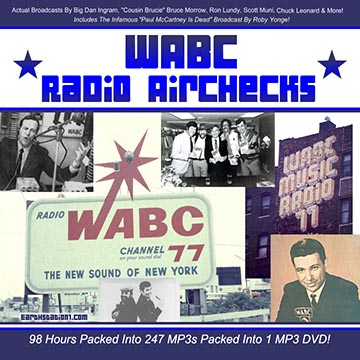
September 10, 1942: #BOTD: #HBD! Danny
Hutton, Irish-American singer, best known as one of the three lead
vocalists in the band Three Dog Night, is #born Daniel Anthony
Hutton in Buncrana, Donegal, Ireland. Hutton was a songwriter and
singer for Hanna-Barbera Records from 1965-66. Hutton had a modest
national hit, "Roses and Rainbows", during his tenure as
a recording artist for Hanna-Barbera Records. Hutton is the father
of Dash Hutton, the former drummer in the American rock band Haim.
Three Dog Night was based around the vocal skills of Danny Hutton,
Chuck Negron, and Cory Wells. In 1967, Hutton conceived the idea
of a three-vocalist group, and he and Wells enlisted mutual friend
Negron. The official commentary included in the CD set Celebrate:
The Three Dog Night Story, 1965-1975 states that vocalist Hutton's
then-girlfriend June Fairchild suggested the name after reading a
magazine article about indigenous Australians, in which it was
explained that on cold nights they would customarily sleep in a
hole in the ground whilst embracing a dingo, a native species of
wild dog. On colder nights they would sleep with two dogs and if
the night was freezing, it was a "three-dog night".
Their first Top Ten hit was "One", in 1969. "Mama
Told Me (Not to Come)" reached #1 a year later. "Joy to
the World" became the group's biggest hit in 1971. The
group's final #1, "Black and White", topped the Hot 100
in 1972. "The Show Must Go On" was their final Top Ten
song, in 1974. They had 21 hit singles, including 11 Top Ten hits
and 12 consecutive gold albums, from 1969 to 1975. On Sale Until
Midnight Tonight PT!
https://store.earthstation1.com/wabc-musicradio-shows-mp3-dvd-60s80s-am-360807775.html
Thu, 10 Sep 2026 04:30:00 PDT
 September 10, 1976: #DOTD: #RIP: Dalton
Trumbo, American novelist and screenwriter who scripted many
award-winning films, including Roman Holiday (1953), Exodus,
Spartacus (both 1960), and Thirty Seconds Over Tokyo (1944), one
of the Hollywood Ten who refused to testify before the House
Un-American Activities Committee (HUAC) in 1947 during the
committee's investigation of alleged Communist influences in the
motion picture industry (b. December 9, 1905) #dies of a heart
attack in Los Angeles, California at the age of 70. He donated his
body to scientific research. He was born James Dalton Trumbo in
Montrose, Colorado. Trumbo graduated from Colorado's Grand
Junction High School. While still in high school, he worked for
Walter Walker as a cub reporter for the Grand Junction Daily
Sentinel, covering courts, the high school, the mortuary and civic
organizations. He attended the University of Colorado at Boulder
in 1924 and 1925, working as a reporter for the Boulder Daily
Camera and contributing to the campus humor magazine, the
yearbook, and the campus newspaper. He was a member of Delta Tau
Delta International Fraternity. In 1924 his father Orus Trumbo
moved the family to California. Shortly after, he fell ill and
died, leaving Dalton to support his mother and siblings. For nine
years after his father died, Trumbo worked the night shift
wrapping bread at a Los Angeles bakery, and attended the
University of California, Los Angeles (1926) and the University of
Southern California (1928-1930). During this time, he wrote movie
reviews, 88 short stories, and six novels, all of which were
rejected for publication. Trumbo began his professional writing
career in the early 1930s, when several of his articles and
stories were published in mainstream magazines, including
McCall's, Vanity Fair, the Hollywood Spectator and The Saturday
Evening Post. Trumbo was hired as managing editor of the Hollywood
Spectator in 1934. Later he left the magazine to become a reader
in the story department at Warner Bros. studio. His first
published novel, Eclipse (1935), was released during the Great
Depression. Writing in the social realist style, Trumbo drew on
his years in Grand Junction to portray a town and its people. The
book was controversial in his hometown, where many people took
issue with his fictional portrayal. Trumbo started working in
movies in 1937 but continued writing prose. His anti-war novel
Johnny Got His Gun won one of the early National Book Awards: the
Most Original Book of 1939. It was inspired by an article Trumbo
had read several years earlier: an account of a hospital visit by
the Prince Of Wales to a Canadian soldier who had lost all his
limbs in World War I. During the late 1930s and early 1940s,
Trumbo became one of Hollywood's highest-paid screenwriters, at
about 4K USD per week while on assignment, and earning as much as
80K USD in one year. He worked on such films as Thirty Seconds
Over Tokyo (1944), Our Vines Have Tender Grapes (1945), and Kitty
Foyle (1940), for which he was nominated for an Academy Award for
Best Adapted Screenplay. Later, Trumbo, the other members of the
Hollywood Ten, and hundreds of other professionals in the industry
were blacklisted by Hollywood. He was able to continue working
clandestinely on major films, writing under pseudonyms or other
authors' names. His uncredited work won two Academy Awards for
Best Story: for Roman Holiday (1953), which was presented to a
front writer, and for The Brave One (1956), which was awarded to a
pseudonym used by Trumbo. When he was given public screen credit
for both Exodus and Spartacus in 1960, it marked the beginning of
the end of the Hollywood Blacklist for Trumbo and other affected
screenwriters. He finally was given full credit by the Writers'
Guild for Roman Holiday in 2011, nearly 60 years after the fact.
https://store.earthstation1.com/legacy-of-the-hollywood-blacklist-dvd-mp4-download-usb-flash-driv4.html
September 10, 1976: #DOTD: #RIP: Dalton
Trumbo, American novelist and screenwriter who scripted many
award-winning films, including Roman Holiday (1953), Exodus,
Spartacus (both 1960), and Thirty Seconds Over Tokyo (1944), one
of the Hollywood Ten who refused to testify before the House
Un-American Activities Committee (HUAC) in 1947 during the
committee's investigation of alleged Communist influences in the
motion picture industry (b. December 9, 1905) #dies of a heart
attack in Los Angeles, California at the age of 70. He donated his
body to scientific research. He was born James Dalton Trumbo in
Montrose, Colorado. Trumbo graduated from Colorado's Grand
Junction High School. While still in high school, he worked for
Walter Walker as a cub reporter for the Grand Junction Daily
Sentinel, covering courts, the high school, the mortuary and civic
organizations. He attended the University of Colorado at Boulder
in 1924 and 1925, working as a reporter for the Boulder Daily
Camera and contributing to the campus humor magazine, the
yearbook, and the campus newspaper. He was a member of Delta Tau
Delta International Fraternity. In 1924 his father Orus Trumbo
moved the family to California. Shortly after, he fell ill and
died, leaving Dalton to support his mother and siblings. For nine
years after his father died, Trumbo worked the night shift
wrapping bread at a Los Angeles bakery, and attended the
University of California, Los Angeles (1926) and the University of
Southern California (1928-1930). During this time, he wrote movie
reviews, 88 short stories, and six novels, all of which were
rejected for publication. Trumbo began his professional writing
career in the early 1930s, when several of his articles and
stories were published in mainstream magazines, including
McCall's, Vanity Fair, the Hollywood Spectator and The Saturday
Evening Post. Trumbo was hired as managing editor of the Hollywood
Spectator in 1934. Later he left the magazine to become a reader
in the story department at Warner Bros. studio. His first
published novel, Eclipse (1935), was released during the Great
Depression. Writing in the social realist style, Trumbo drew on
his years in Grand Junction to portray a town and its people. The
book was controversial in his hometown, where many people took
issue with his fictional portrayal. Trumbo started working in
movies in 1937 but continued writing prose. His anti-war novel
Johnny Got His Gun won one of the early National Book Awards: the
Most Original Book of 1939. It was inspired by an article Trumbo
had read several years earlier: an account of a hospital visit by
the Prince Of Wales to a Canadian soldier who had lost all his
limbs in World War I. During the late 1930s and early 1940s,
Trumbo became one of Hollywood's highest-paid screenwriters, at
about 4K USD per week while on assignment, and earning as much as
80K USD in one year. He worked on such films as Thirty Seconds
Over Tokyo (1944), Our Vines Have Tender Grapes (1945), and Kitty
Foyle (1940), for which he was nominated for an Academy Award for
Best Adapted Screenplay. Later, Trumbo, the other members of the
Hollywood Ten, and hundreds of other professionals in the industry
were blacklisted by Hollywood. He was able to continue working
clandestinely on major films, writing under pseudonyms or other
authors' names. His uncredited work won two Academy Awards for
Best Story: for Roman Holiday (1953), which was presented to a
front writer, and for The Brave One (1956), which was awarded to a
pseudonym used by Trumbo. When he was given public screen credit
for both Exodus and Spartacus in 1960, it marked the beginning of
the end of the Hollywood Blacklist for Trumbo and other affected
screenwriters. He finally was given full credit by the Writers'
Guild for Roman Holiday in 2011, nearly 60 years after the fact.
https://store.earthstation1.com/legacy-of-the-hollywood-blacklist-dvd-mp4-download-usb-flash-driv4.html
Thu, 10 Sep 2026 04:30:00 PDT
September 10, 2011: #DOTD: #RIP: Cliff
Robertson, American actor with a film and television career that
spanned half a century (b. September 9, 1923) #dies of natural
causes in Stony Brook, New York, one day after his 88th birthday.
His body was cremated, and a private funeral was held at St.
Luke's Episcopal Church in East Hampton, New York. He is interred
at the Cedar Lawn Cemetery in Paterson, New Jersey. Cliff
Robertson was born Clifford Parker Robertson III in La Jolla,
California. Cliff Robertson portrayed a young John F. Kennedy in
the 1963 film PT 109, and won the 1968 Academy Award for Best
Actor for his role in the movie Charly. On television, he
portrayed retired astronaut Buzz Aldrin in the 1976 adaptation of
Aldrin's autobiographic Return to Earth, played a fictional
character based on Director of Central Intelligence Richard Helms
in the 1977 miniseries Washington: Behind Closed Doors, and
portrayed Henry Ford in the 1987 Ford: The Man and the Machine.
His last well-known film appearances were from 2002-2007 as Uncle
Ben in the Spider-Man film trilogy.
https://store.earthstation1.com/john-fitzgerald-kennedy-1964-documentary1964.html
Thu, 10 Sep 2026 04:30:00 PDT
September 10, 1915: #BOTD: #HBD! Edmond
O'Brien, American actor and director (d. May 9, 1985) is #born
Eamon Joseph O'Brien in Brooklyn, New York, the seventh and
youngest child of Agnes (nee Baldwin) and James O'Brien, Irish
immigrants native to Tallow, County Waterford, Ireland. He
appeared in more than 100 films from the 1940s to the 1970s, often
playing character parts. He received the Academy Award for Best
Supporting Actor and the corresponding Golden Globe for his
supporting role in The Barefoot Contessa (1954), as well as a
second Golden Globe and another Academy Award nomination for Seven
Days in May (1964). His other notable films include The Hunchback
of Notre Dame (1939), The Killers (1946), Fighter Squadron (1948),
White Heat (1949), D.O.A. (1950), Julius Caesar (1953), 1984
(1956), The Girl Can't Help It (1956), The Man Who Shot Liberty
Valance (1961), and The Wild Bunch (1969). Edmond O'Brien died at
St. Erne's Sanitorium in Inglewood, California of complications
from Alzheimer's disease at age 69. He is buried in Holy Cross
Cemetery in Culver City, Los Angeles County, California.
https://store.earthstation1.com/1984-george-orwell-edmond-o39brien-michael-redgra198439.html
Thu, 10 Sep 2026 04:30:00 PDT
September 10, 1966: Aesthetics: The
Performing Arts: Music: Music History: Music Of The United States:
Soul Music: Soul Music Concerts: -- James Brown performs at the
International Amphitheatre in Chicago, Illinois, to promote his
new song "Money Won't Change You", a song Brown recorded
earlier in the year. The song was released in edited form as a
two-part single which charted #11 R & B and #53 Pop. It was
his third message song, after "Don't Be a Drop-Out," and
"Get it Together", songs recorded in the wake of the
Civil Rights Movement. Both parts of the single were included on
Brown's 1967 album Sings Raw Soul. An unedited version of the song
appeared for the first time in the 1991 box set Star Time. Aretha
Franklin covered "Money Won't Change You" on her 1968
album Lady Soul. The International Amphitheatre was an indoor
arena located in Chicago, Illinois, between 1934 and 1999. It was
located on the west side of Halsted Street, at 42nd Street, on the
city's south side, adjacent to the Union Stock Yards. The arena
was built for 1.5M USD by the Stock Yard company, principally to
host the International Livestock Exhibition. The completion of the
Amphitheatre ushered in an era where Chicago reigned as a
convention capital. In an era before air conditioning and space
for the press and broadcast media were commonplace, the
International Amphitheatre was among the first arenas to be
equipped with these innovations. The arena, which seated 9,000,
was the first home of the Chicago Packers of the NBA during
1961-62. It was also the home of the Chicago Bulls during their
inaugural season of 1966-67. The Amphitheatre was also the primary
home of the Chicago Cougars of the WHA from 1972-1975. The
International Amphitheatre was the home for Chicago's wrestling
scene for years as well as the Chicago Auto Show for approximately
20 years beginning in the 1940s. The Amphitheatre hosted several
Democratic and Republican national conventions: the 1952
Republican National Convention, 1952 Democratic National
Convention, 1956 Democratic National Convention, 1960 Republican
National Convention, and the 1968 Democratic National Convention.
The 1952 Republican National Convention had the distinction of
being the first political convention broadcast live by television
coast to coast, with special studio facilities provided for all
the major networks. The 1968 Democratic National Convention was
one of the most tumultuous political conventions in American
history, noted by anti-war protests. Prior to that, the
Amphitheatre was noted for being the site of one of Elvis
Presley's most notable concerts, in 1957, with the singer wearing
his now legendary gold lame suit for the first time. On September
5, 1964 and August 12, 1966, The Beatles performed at the
Amphitheatre. The 1966 show was the first show of what proved to
be their last tour. Indoor wintertime drag racing was held at the
Amphitheatre twice, on December 30, 1962 and January 5, 1964. It
was great fun, but dangerous, because of the slick cement floors.
Drag racers need asphalt to get tire grip, launch, and control.
The Amphitheatre cement "floor" had very little of
these. On March 13-14, 1976, the Midwest Regional of the North
American Soccer League's 1976 Indoor tournament was hosted by the
Chicago Sting at the Amphitheater. The Rochester Lancers won the
Region to advance to the Final Four played in Florida. In October
1978, English rock group UFO recorded Strangers in the Night at
the International Amphitheatre. The Stock Yards closed in 1971,
but the Amphitheatre remained open, hosting rock concerts, college
basketball and IHSA playoff games, circuses, religious gatherings,
and other events. The shift of many conventions and trade shows to
the more modern and more conveniently-located lakefront McCormick
Place convention center during the 1960s and 1970s began the
International Amphitheatre's decline; as other convention and
concert venues opened in the suburbs, its bookings dropped more.
In December 1981, Joe Frazier had his final boxing match at the
Amphitheatre against Floyd Cummings, which resulted in a draw.
Sold in 1983 for a mere 250K SUD the sprawling Amphitheatre became
difficult to maintain, and proved unable to attract enough large
events to pay for its own upkeep. It was eventually sold to
promoters Cardenas & Fernandez and then the City of Chicago,
which had no more success at attracting events than its previous
owner. In August 1999, demolition of the International
Amphitheatre began. An Aramark Uniform Services plant is located
on the site once occupied by the Amphitheatre.
https://store.earthstation1.com/classic-radio-commercials-old-time-radio-mp3-c3.html
Thu, 10 Sep 2026 04:30:00 PDT
September 10, 1937: The Interwar Period
(The Interbellum, Between The Wars): The Spanish Civil War: 1937
In The Spanish Civil War: The Nyon Conference: -- Nine nations
attend the Nyon Conference to address international piracy in the
Mediterranean Sea. The Nyon Conference was a diplomatic conference
held in Nyon, Switzerland in September 1937 to address attacks on
international shipping in the Mediterranean Sea during the Spanish
Civil War. The conference was convened in part because Italy had
been carrying out unrestricted submarine warfare, although the
final conference agreement did not accuse Italy directly; instead,
the attacks were referred to as "piracy" by an
unidentified body. Italy was not officially at war, nor did any
submarine identify itself. The conference was designed to
strengthen non-intervention in the Spanish Civil War. The United
Kingdom and France led the conference, which was also attended by
Bulgaria, Egypt, Greece, Romania, Turkey, the Soviet Union and
Yugoslavia. The first agreement, signed on 14 September 1937,
included plans to counterattack aggressive submarines. Naval
patrols were established; the United Kingdom and France were to
patrol most of the western Mediterranean and parts of the east,
and the other signatories were to patrol their own waters. Italy
was to be allowed to join the agreement and patrol the Tyrrhenian
Sea if it wished. A second agreement followed three days later,
applying similar provisions to surface ships. Italy and Germany
did not attend, although the former took up naval patrols in
November. In marked contrast to the actions of the
Non-Intervention Committee and the League Of Nations, this
conference succeeded in preventing attacks by submarines.
https://store.earthstation1.com/between-the-wars-dvd-set-all-16-tv-shows-4-discs164.html
Thu, 10 Sep 2026 04:30:00 PDT
September 10, 1965: #DOTD: #RIP: Bobby
Jordan, American actor, most notable for being a member of the
Dead End Kids, the East Side Kids, and The Bowery Boys (b. April
1, 1923) #dies at the age of 42 of cirrhosis of the liver at the
Veterans Hospital in Sawtelle, California, where he had been
admitted for treatment on August 25, 1965. He is buried at Los
Angeles National Cemetery in Los Angeles, California. Bobby Jordan
was born Robert G. Jordan in Harrison, New York. Jordan was a
talented toddler and could sing, tap dance, and play the saxophone
by the time he was six years old. At the age of four, he was
working in an early film version of A Christmas Carol. His mother
took him to talent shows in and around Harrison, New York. He also
modeled for newspaper and magazine advertisements and appeared in
short films and radio programs. In the late 1920s, his family
moved to the upper west side of Manhattan. In 1929, he was cast as
Charles Hildebrand in the 1929 Broadway play, Street Scene. Though
he was the youngest, Jordan was the first of the boys who made up
the Dead End Kids to work in films with a role in a 1933 Universal
short. In 1935, he became one of the original Dead End Kids by
winning the role of Angel in Sydney Kingsley's Broadway drama Dead
End about life in the slums of the east side of New York City. The
play was performed at the Belasco Theatre and ran for three years
with over 600 performances. He appeared for the first season and
the beginning of the second but left in mid-November 1936. He
returned in time to join the others in 1937 in Hollywood,
California to make the movie version of the play, starring big
names such as Humphrey Bogart, Joel McCrea, Sylvia Sidney, and
Claire Trevor. Following the making of Dead End, Jordan found
himself "released" from his contract at Goldwyn, and,
subsequently, he appeared at Warner Brothers with the rest of the
Dead End Kids. After one year, Warners released most of them, but
kept Leo Gorcey and Jordan as solo performers. Jordan appeared (as
"Douglas Fairbanks Rosenbloom") in Warner's Damon Runyon
comedy A Slight Case of Murder (1938) and at Metro-Goldwyn-Mayer
in Young Tom Edison (1940). In 1940, Jordan appeared in the film
Military Academy and accepted an offer from producer Sam Katzman
to star in a new tough-kid series called "The East Side
Kids." Leo Gorcey soon joined him, then Huntz Hall, and the
trio continued to lead the series through 1943, when Jordan
entered the United States Army during World War II as a foot
soldier in the 97th Infantry Division. He was subsequently
involved in an elevator accident that forced him to have surgery
to remove his right kneecap. When Jordan returned to films in
1945, he found that his former gang-mates Gorcey and Hall were
obtaining the lion's share of both the content and the salary for
the new Bowery Boys film series. Dissatisfied with his background
status, he left the series after eight entries, and made only a
few films thereafter. On July 1, 1957, Jordan played Bob Ford, the
assailant of Jesse James, in the Dale Robertson television series,
Tales of Wells Fargo. The episode ends some two months before Ford
assassinated James in the latter's residence in St. Joseph,
Missouri. Hugh Beaumont appeared in the episode as Jesse James. In
subsequent years, Jordan worked as a bartender, a bad choice for
him considering his alcoholism. He worked to support his family as
a door-to-door photograph salesman and as a roughneck for an oil
driller. In 1957, Jordan and his wife divorced. His former Dead
End Kid and East Side Kid co-star, Leo Gorcey once observed,
"Bobby Jordan must not have had a guardian angel." One
of his last performances was in a Bonanza episode, "The Many
Faces of Gideon Flinch", where he played one of Bullet Head
Burke's right hand men.
https://store.earthstation1.com/pride-of-the-bowery-dvd-east-side-kids-bowery-boys.html
Thu, 10 Sep 2026 04:30:00 PDT
September 10, 1965: #DOTD: Father Divine,
also known as Reverend M. J. Divine, African American spiritual
leader from about 1907 until his death (b. c. 1876) #dies at 2:20
A.M. of lung congestion caused by arteriosclerosis and diabetes
mellitus at his 73-acre Woodmont estate in Gladwyne on the
Philadelphia Main Line in Lower Merion Township, Pennsylvania,
aged 89. He is buried in theShrine To Life at Woodmont. His widow
Edna Rose Ritchings and remaining followers insist his spirit is
still alive, and always refer to Father Divine in the present
tense. Believers keep the furnishings of Father Divine's personal
rooms at Woodmont just as they were as a shrine to his life.
Father Divine's widow Edna Rose Ritchings became the spiritual
leader of the movement. In 1972, she fought an attempt by Jim
Jones to take over the movement's dwindling devotees. Jones based
some of his doctrines on Father Divine's International Peace
Mission movement, and Jones' custom of tape-recording all his
sermons was copied from Divine, who "spoke" to his
followers via archived sermon tapes once ill health forced him to
cease speaking at meetings. Although a few members of Father
Divine's Mission joined the Peoples Temple after Jones made his
play for leadership of the movement, the power push was, in terms
of its ultimate objective, a failure. Jim Jones even claimed to be
the reincarnation of Father Divine; that Jones was 34 years old at
the time of Father Divine's death made his claims of being a new
incarnation rather hard to sustain. Jones claimed Divine's spirit
had entered his body upon the passing of the elder man, but
Ritchings was left unimpressed by Jones' impassioned rhetoric.
Little is known about Father Divine's early life, or even his real
given name. His full self-given name was Reverend Major Jealous
Divine, and he was also known as "the Messenger" early
in his life. Father Divine and the peace movement he started did
not keep many records. Father Divine declined several offers to
write his biography, saying that "the history of God would
not be useful in mortal terms". He also refused to
acknowledge his relationship with any family. Newspapers in the
1930s had to dig up his probable given name: George Baker. This
name is not recognized by the Library of Congress, and from 1979,
there is no further use of that name as a heading for Father
Divine in libraries' catalogs. FBI files record his name as
"George Baker alias 'God'". In 1936 Eliza Mayfield
claimed to be Father Divine's mother. She stated that his real
name was Frederick Edwards from Hendersonville, North Carolina,
and he had abandoned a wife and five children, but Mayfield
offered no proof and claimed to not remember his father's name.
Father Divine replied that "God has no mother." Father
Divine's childhood remains a contentious point. Some, especially
earlier researchers, suppose that he was born in the Deep South,
most likely in Georgia, as the son of sharecroppers. Newer
research by Jill Watts, based on census data, finds evidence for a
George Baker Jr. of appropriate age born in an African American
enclave of Rockville, Maryland, called Monkey Run. If this theory
is correct, his mother was a former slave named Nancy Baker, who
died in May 1897. Most researchers agree that Father Divine's
parents were freed black slaves. Notoriously poor records were
kept about this generation of African Americans, so controversy
about his upbringing is not likely to be resolved. On the other
hand, he and his first wife, Peninniah (variant spellings:
Penninah, Peninnah, Penniah) claimed that they were married on
June 6, 1882. Father Divine was probably called George Baker
around the turn of the century. He worked as a gardener in
Baltimore, Maryland. In a 1906 trip to California, Father Divine
became acquainted with the ideas of Charles Fillmore and the New
Thought movement, a philosophy of positive thinking that would
inform his later doctrines. Among other things, this belief system
asserted that negative thoughts led to poverty and unhappiness.
Songwriter Johnny Mercer credited a Father Divine sermon for
inspiring the title of his song "Ac-Cent-Tchu-Ate the
Positive". Father Divine attended a local Baptist Church,
often preaching, until 1907, when a traveling preacher named
Samuel Morris spoke and was expelled from the congregation.
Morris, originally from Allegheny County, Pennsylvania, had a
soft-spoken and uncontroversial sermon until the end, when he
raised his arms and shouted "I am the Eternal Father!"
This routine had him thrown out of many churches in Baltimore, and
was apparently unsuccessful until Morris happened upon the
receptive Father Divine. In his late 20s, Father Divine became
Morris's first follower and adopted a pseudonym, "The
Messenger". The Messenger was a Christ figure to Morris's God
the Father. Father Divine preached with Morris in Baltimore out of
the home of former evangelist Harriette Snowden, who came to
accept their divinity. Morris began calling himself "Father
Jehovia". Divine and Father Jehovia were later joined by John
A. Hickerson, who called himself Reverend Bishop Saint John the
Vine. John the Vine shared the Messenger's excellent speaking
ability and his interest in New Thought. In 1912, the three-man
ministry collapsed, as John the Vine denied Father Jehovia's
monopoly on godhood, citing 1 John 4:15 to mean God was in
everyone: "Whoever shall confess that Jesus is the Son of
God, God dwells in him and he in God." Father Divine parted
ways with his former associates. Denying that Father Jehovia was
God, and saying that not everyone could be God, he declared that
he himself was God, and the only true expression of God's spirit.
Father Divine founded the International Peace Mission movement,
formed its doctrine and oversaw its growth from a small and
predominantly black congregation into a multiracial and
international church. Due to his ideology, he is considered to be
a cult leader. He made numerous contributions toward his
followers' economic independence and racial equality. He was a
contemporary of other religious leaders such as Daddy Grace,
Charles Harrison Mason, Noble Drew Ali, James F. Jones (also known
as Prophet Jones), Wallace Fard Muhammad, Elijah Muhammad and Jim
Jones.
https://store.earthstation1.com/the-march-of-time-dvd-set-all-3-tv-series-19334631933467.html
Thu, 10 Sep 2026 04:30:00 PDT
September 10, 2007: #DOTD: #RIP: Jane
Wyman, American actress, singer, dancer, and philanthropist (b.
January 5, 1917) #dies in her sleep of natural causes at the age
of 90 at her home in Rancho Mirage, California. She is buried at
Forest Lawn Memorial Park in Cathedral City, California. Jane
Wyman was born Sarah Jane Mayfield in St. Joseph, Missouri. She
received an Academy Award, three Golden Globe Awards and
nominations for two Primetime Emmy Awards. Wyman's professional
career began at age 16 in 1933, when she signed with Warner Bros.
A popular contract player, she frequently played the leading lady,
appearing in films such as Public Wedding (1937), Brother Rat
(1938), its sequel Brother Rat and a Baby (1940), Bad Men of
Missouri (1941), Stage Fright (1950) So Big (1953), Magnificent
Obsession (1954), and All That Heaven Allows (1955). She received
four nominations for the Academy Award for Best Actress, winning
for Johnny Belinda (1948). In her later years, she achieved
continuing success on the soap opera Falcon Crest (1981-1990),
portraying the role of villainous matriarch Angela Channing. Wyman
was the first wife of actor and future President Ronald Reagan.
https://store.earthstation1.com/burns-and-allen-radio-mp3-dvd-comedy-show3.html
Thu, 10 Sep 2026 04:30:00 PDT
September 10, 1939: #BOTD: #HBD! Cynthia
Lennon, first wife of John Lennon, mother of Julian Lennon (d.
April 1, 2015) is #born Cynthia Powell in Blackpool, a large town
and seaside resort in Lancashire, England. Raised in Hoylake on
the Wirral Peninsula, she attended the Liverpool College of Art
where Lennon was also a student. Powell and Lennon started a
relationship after meeting in a calligraphy class. When Lennon was
performing in Hamburg with the Beatles, Powell rented his bedroom
at 251 Menlove Avenue in the Liverpool suburb of Woolton from his
aunt and legal guardian, Mimi Smith. After Powell became pregnant,
she and Lennon married in August 1962, and the couple lived at
Kenwood in Weybridge from 1964 to 1968, where she kept house and
participated with Lennon in a London-based social life. In 1968,
Lennon left her for Japanese artist Yoko Ono; as a result, the
couple's divorce was legally granted in November 1968 on the
grounds of adultery. Powell had three further marriages. She
published a book of memoirs, A Twist of Lennon, in 1978, and a
more intimate biography, John, in 2005. Over the years, she held
several auctions of memorabilia associated with her life with
Lennon. In her later years she lived in Calvia, Mallorca, Spain
where she died at her home at the age of 75 following a brief bout
with cancer, her son Julian by her side. Her remains were
cremated; the final disposition of her ashes is not publicly
disclosed.
https://store.earthstation1.com/the-compleat-beatles-documentary-dvd.html